A recent podcast encouraged listeners to widen their circle and step in rather than stand back. The message was about embracing people who are different from us and sharing our personal experience with Christ along the way. That encouragement stirred something in me and reminded me of the many resources I explored during the year following my diagnosis.
I want to share those resources here in the hope that they may be helpful to others. Some supported me as a person living with dementia, some are especially useful for caregivers, and others could benefit anyone navigating unexpected life changes.
In a world where we often rely on reviews before trying something new, a few of my reflections may sound a bit like that—and that’s okay.
Apps & Programs
Hallow App
This app has been a true lifeline for me. It’s easy to navigate, works consistently, and allows you to set routines with helpful reminders. I start my mornings with a short, uplifting devotion based on Lisa Brenninkmeyer’s Be Still book and have gradually explored more of what it offers—particularly enjoying the Word of the Day puzzle, Jeff Cavins’ podcast, and closing my evenings with Dave Pivonka’s Holy Spirit reflections.
There is soothing music, brief lessons on people from both the Old and New Testaments, and calming sleep stories. While it is Catholic-based, it is appropriate for anyone with a Christian faith background. For me, it has been worth every penny.
Calm App
This app includes soothing music and auditory sleep programs. I didn’t end up using it as often as I expected, but I can see how it might be helpful for calming agitation. Personally, I found it somewhat difficult to navigate given some of my challenges, and it occasionally closed without explanation (which could have been operator error).
Glorify App
I was hoping this would be a non-denominational alternative similar to Hallow, but it fell short for me. The navigation was not intuitive, and the content—stories, activities, and speakers—did not compare. I canceled my subscription after the free trial period.
Care Calendar
www.carecalendar.org
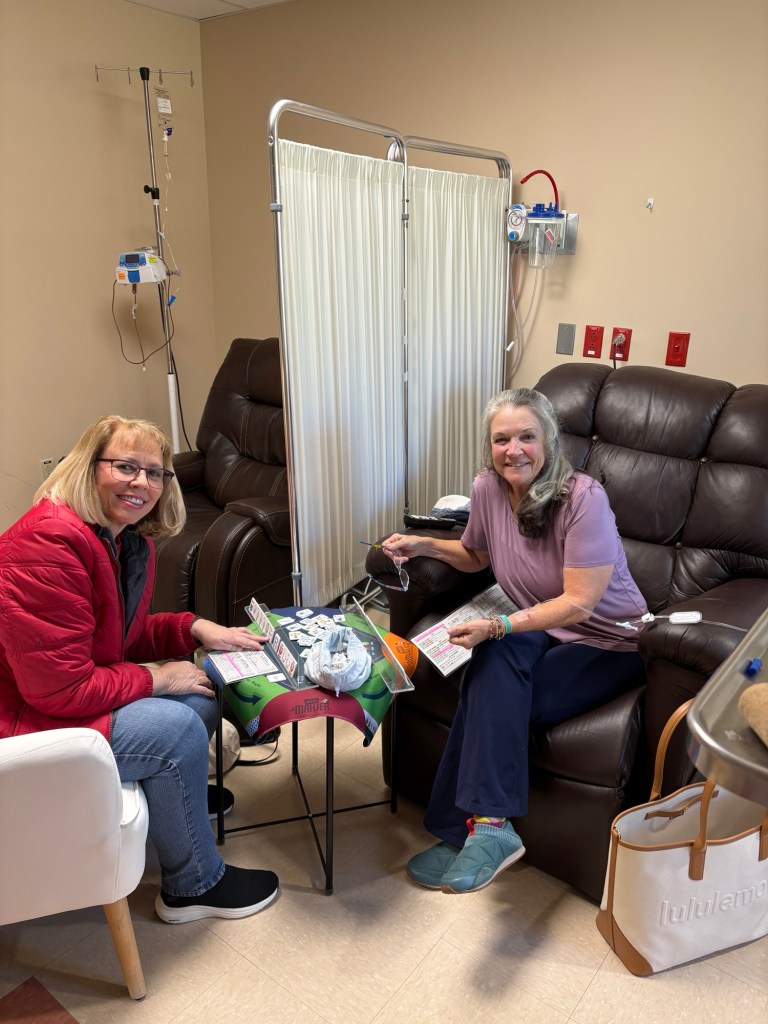
This free website helps organize meals, rides, and other support during times of illness, recovery, or major life events. My friends encouraged me to set one up so they could sign up to take me to infusion appointments and accompany me to doctor visits.
The calendar is easy to create, has solid privacy options, and is simple for even non-tech-savvy friends to use. Honestly, setting it up required me to face my “I hate to ask for help” tendency. What surprised me most was hearing how much my friends felt blessed by being able to help in a way that truly mattered. It definitely helped me widen my circle.
iPhone Health App
This has been a lifesaver. I keep my medications and vitamins listed in the app, which is incredibly helpful at doctor visits. I also use the built-in medication reminders (not the regular phone alarm), which prompt me to take—and record—that I’ve taken my meds at the correct times.
This system works well for me right now, although I know a time may come when additional support will be needed.
Counseling, Professional Support, Caregiver Wisdom
Teepa Snow
www.teepasnow.com
Teepa Snow is a nationally recognized dementia care expert and a leading advocate for positive care for individuals living with dementia. Her website offers a wealth of resources for caregivers and medical professionals alike.
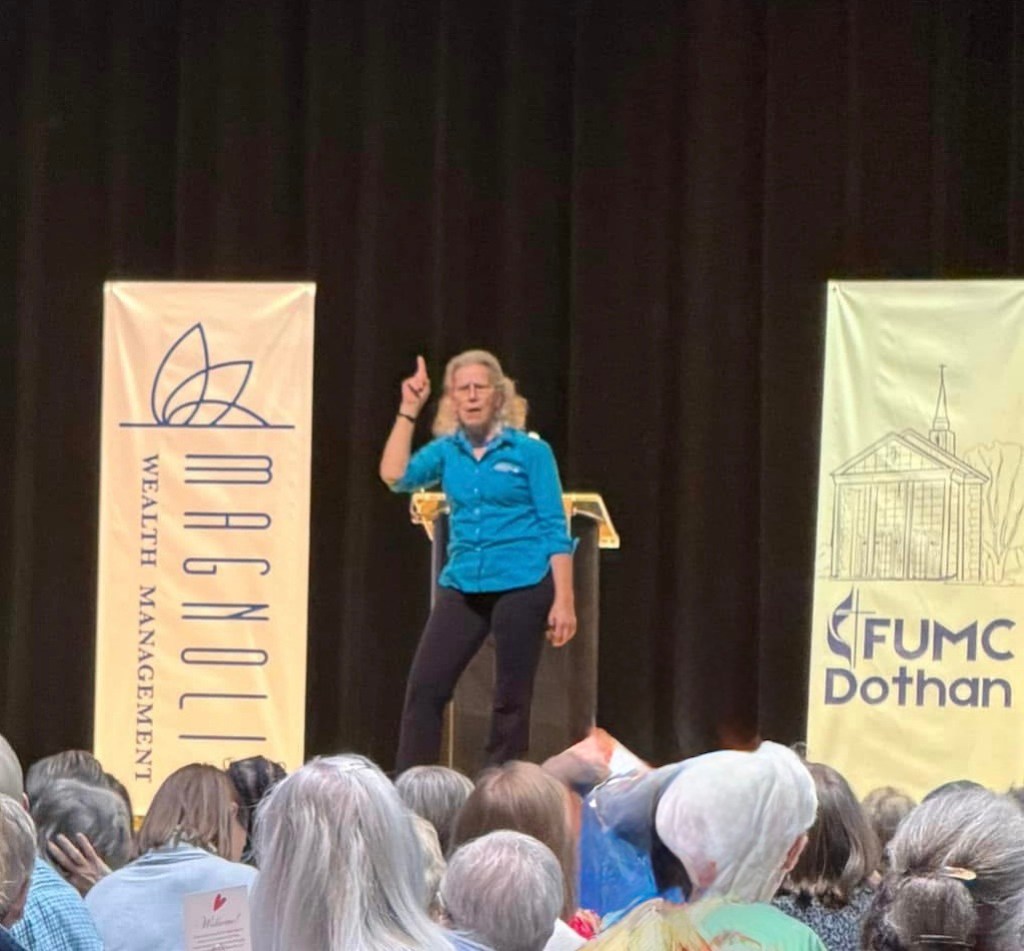
In a rare opportunity, Teepa will be speaking in person in Dothan in January 2026. It will be well worth the $12 ticket to attend the workshop. Information can be found through this Facebook post:
https://www.facebook.com/share/p/1CALqjbXa4/
Rachel Carpenter, Counselor
carpentercounseling.rachel@gmail.com
With personal experience of dementia in her own family, she provides compassionate support for both patients and caregivers.
Rachel is based in Dothan but offers televisits for those outside the area or unable to come in person
Her background includes music therapy, addiction counseling, and veteran therapy, making her someone many can lean on. She can be reached via phone or text at 334-769-2735 or by email. She also has a Facebook page.
Jo Huey – The 10 Absolutes of Alzheimer’s Caregiving
Jo Huey, an Alzheimer’s caregiver for more than 30 years, created what she calls The 10 Absolutes of Alzheimer’s Caregiving. These principles are grounded not in theory, but in decades of lived experience. She expands on them in her book, Alzheimer’s Disease: Help and Hope.
As a patient, I can’t overstate how meaningful I find #1 and #5. It’s not that I don’t want to be corrected—it’s that my ability to think quickly enough to volley a topic back and forth is no longer there. When that happens, I simply shut down.
And #5 is critical: words, events, or memories that are gone for a person with Alzheimer’s are often truly gone. No amount of hints, “you know,” or prodding will bring them back. Simply tell the word or the information and move on. That kindness matters more than being right.
Be Light Care Consulting
https://tinyurl.com/yc6axakm
Be Light Care Consulting features Adria Thompson’s “must-see” short videos that offer insight, encouragement, and practical wisdom for everyday, one-on-one care between dementia patients and their families or caregivers.
Her reels—available on Facebook and Instagram—are uplifting, relatable, and often affirming in ways that make you feel less alone and more understood. The content is bite-sized, easy to absorb, and grounded in compassion and real-life caregiving moments. Learn more at bio.belightcare.com.
Faith-Based & Community Support
Respite For All
Respite for All is a national movement of faith-based, volunteer-driven programs dedicated to building communities of connection and well-being for those living with Alzheimer’s disease and related dementias. These programs provide daily activities for participants as well as support for caregivers and families.
We are blessed to have a wonderful program here in Dothan, along with others throughout the South and across the country. You can visit www.respiteforall.org to see if there is a program near you.
Hilarity for Charity (HFC) www.wearehfc.org
I absolutely love this organization. I mean who doesn’t need to laugh along the way?! HFC is a national nonprofit focused on supporting families impacted by Alzheimer’s, activating the next generation of advocates, and advancing brain health research and education.
I found HFC through a Netflix documentary shortly after my diagnosis, when I knew I needed to be more social and proactive for my own well-being. Caregivers—please consider attending the Calm Through Coloring Zoom session once a month. I joined not realizing it was intended for caregivers, and it became the most calming night of my month. No one minded that I was a patient instead. HFC also offers respite grants, virtual yoga, educational resources, and has an active Facebook presence. If nothing else, watch the documentary created by the founders.
Leqembi and Kisunla Support Group (Facebook)
https://tinyurl.com/35brhf5e
This group was created for patients taking plaque-buster drugs, and it is the most caring, supportive community I’ve found. Spouses and caregivers can ask infusion-related questions, and patients like me can ask even the “silliest” questions without judgment.
One of the admins, Dave—an Alzheimer’s patient himself—has an incredible depth of knowledge about trials, medications, testing, and emerging research. If you have trouble finding the group, feel free to reach out to me.
Products
“Empowering Me” Book (shameless plug)
https://prisspress.com/empowering-me/
This book was created to help individuals communicate their personal preferences, routines, and important medical details—especially during a health crisis. It’s designed to be a practical tool that speaks for you when you may struggle to do so yourself.
The cost is $10 for local pickup or $15 to be shipped. Ordering information can be found through the Empowering Me link.
Lifestyle & Activities
American Mahjong (not the computer version)
Oh my gosh—what a brain workout. Six months ago, I never would have believed this was something I could do. I was discouraged by my recent testing scores, struggling with word recall, and my math skills felt nearly nonexistent.
I told my friends I would just watch (I even wore a shirt to the first night that said exactly that), but they didn’t let me stay on the sidelines. It was slow going at first, but now I can hold my own during games. Yes, they still help me recall tile names, remind me when it’s my turn, and repeat the rules more times than I can count—but I can tell it has improved my concentration and provided valuable social interaction.
Travel Puzzles
We all know puzzles are important for brain health. I started with standard-sized puzzles and left them on the table, completing several—but it really bothered me that they were always out, messy, and in the way.
Then I discovered travel puzzles that come in small, portable tubes. They’re still challenging but can be done anywhere—even on a tray in your lap—and easily put away when you’re done. There are countless themes and price points available. I started with a set of three for $15, and they’ve been a great fit for me. https://tinyurl.com/36k5uxyc
Products & Home Supports
Fingerprint Door Locks
It was a real shock the day I came back from a walk and couldn’t remember the code to my front door. It had been the same numbers for at least 20 years—half my son’s friends knew it! I ended up sitting on the front porch until I remembered it was tied to an old phone number.
After that, my son installed fingerprint door locks. They are incredibly easy for me to use—just touch the lock. He can also unlock the door remotely if needed, and a few trusted people have their fingerprints programmed so they can check on me or let me in. There are several options available, but this is the model I use. My son said installation was very easy. https://tinyurl.com/bp9v5syk
Skylight Calendar
A smart, touchscreen calendar that tracks schedules, chores, meal prep, and more. Mine was a Christmas gift, so I’m still learning, but I like that it sits on my kitchen counter (it can also hang on a wall). Family members can add appointments remotely from their phones, and it’s easy to read and navigate.
I still use a paper calendar because I like to write notes to myself—but I enjoy writing, so there’s that! I’ll give a more complete review down the road. myskylight.com
Hero Pill Dispenser (not yet purchased)
I haven’t purchased this yet, but it comes highly recommended by caregivers in my support group. It does have a hefty yearly price tag, but users say it’s worth every penny. There are less expensive alternatives on Amazon without subscriptions, though they aren’t quite as robust. For now, the Health app on my iPhone is keeping me on track, but I expect I’ll explore other options in the coming months.
MyID Medical Bracelet
On the day of my first infusion, I was given an alert card listing medications that are contraindicated for me and told to keep it in my wallet. When I mentioned this to my daughter-in-law (an ER nurse), she gently corrected that assumption. She explained that in a true emergency, medical teams do not search phones, wallets, or purses—they’re focused on saving a life. What they often notice is a medical bracelet.
Because of that, I wear a MyID bracelet. It’s comfortable, not bulky, and has held up beautifully after a year of daily wear. On the back is a QR code that can be quickly scanned to access critical medical information. It has given me—and my family—peace of mind.
More information can be found at www.shop.getmyid.com.
Health, Nutrition, Diet
Mediterranean Diet
One of the first recommendations I received at Mayo Clinic was to adopt the Mediterranean diet, along with staying active, doing puzzles, exercising, and continuing my book club. I’ve found the diet easy to follow, satisfying, and flavorful.
Do I still want chicken fingers and fries sometimes? Absolutely. But I stick with it most of the time. I started with online research and Mediterranean Diet for Dummies, then pared recipes down to meals I can easily prepare. (I no longer use the big oven and stove—don’t ask me why!)
Mushroom Coffee (Lion’s Mane)
My doctor recommended Lion’s Mane and other supplements for brain health. Since Lion’s Mane is a mushroom—and I have no desire to eat mushrooms—I was relieved to find it in coffee form because I love coffee!
Fair warning: some mushroom coffees taste terrible. This one, with a splash of flavored cream, has become my daily 3:00 p.m. treat. It includes a solid dose of brain-supporting nutrients and nootropic herbs. https://tinyurl.com/ywdcum4d
Salty Snacks
My taste buds have changed this past year, possibly due to medication or perhaps brain changes related to Alzheimer’s. I seem to crave salt and that was never the case before. While salt isn’t always ideal, I’m choosing my battles. Because grazing is often better than large meals for dementia patients, my go-to snack is Walmart’s Ultra Thin pretzels (green bag—do not get the regular thin ones). They sell out often, and you can blame me when you’re hooked.
Carry-Everywhere Snack
Planters Nut Lovers Mix with pistachios, almonds, and cashews. This is the most sustaining, brain-friendly snack mix I’ve found. I keep a small bag with me at all times—for blood sugar dips, infusion days, or surprise hunger. It’s hard to find locally, so I order it online.
This list is not exhaustive and will likely grow as I continue learning what supports this season of life. If you have found a resource, product, practice, or community that has helped you or someone you love, I invite you to share it. We learn best when we learn from one another, and your experience may be exactly what someone else needs
.




 PrissPress
Leave a comment